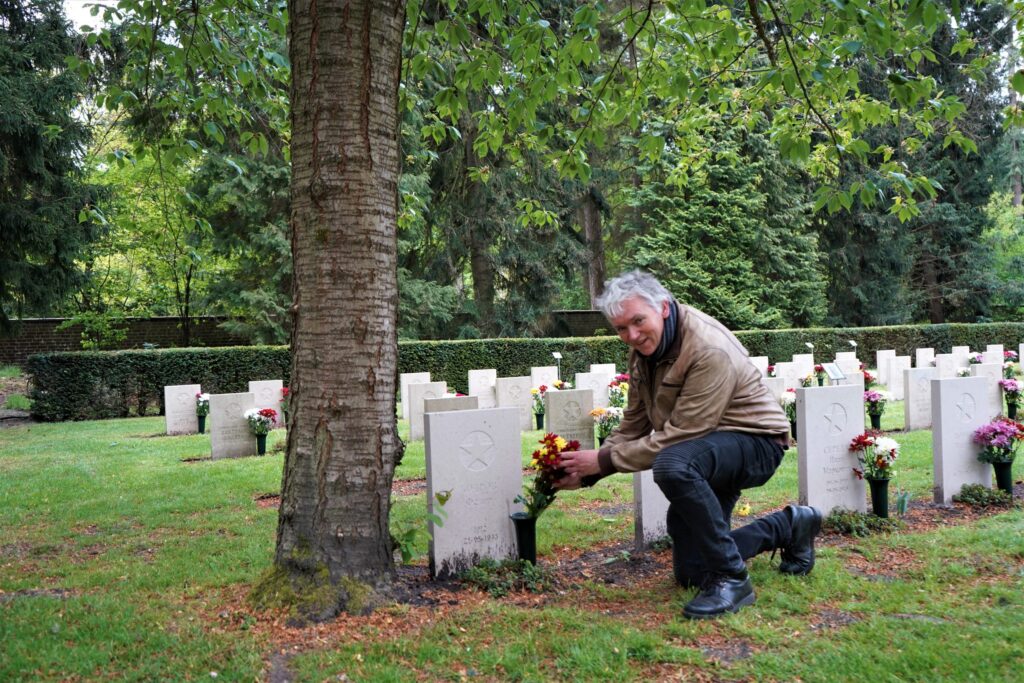
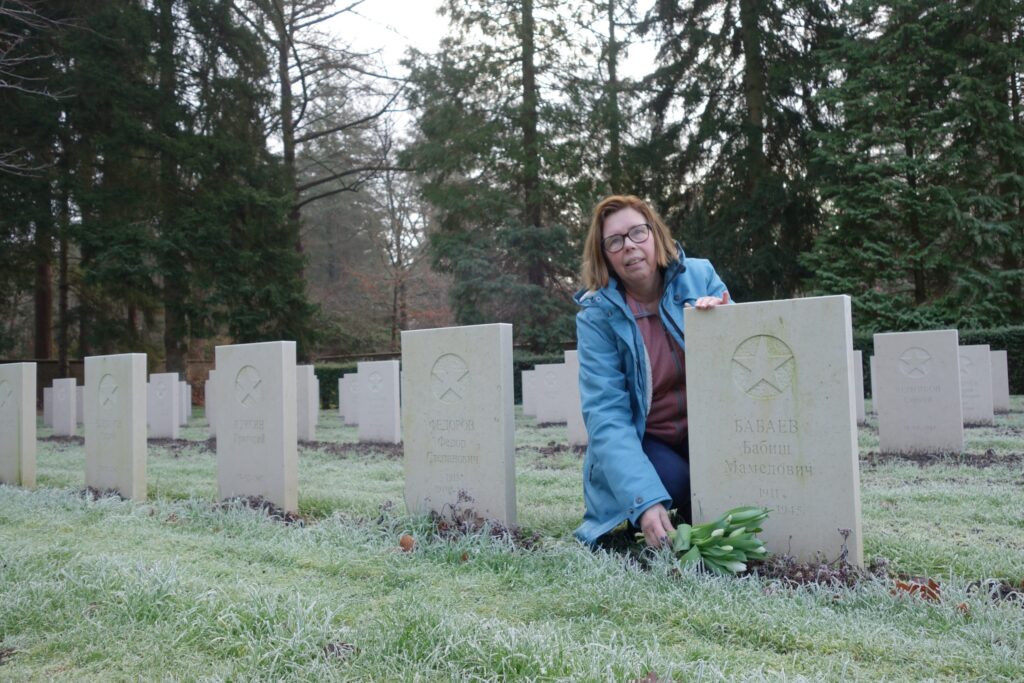
José works as a consultant in a neighbourhood organization. Serves on the board of the Local History Society Leusden and is a member of the Embassy of Peace Leusden as well as a nature guide. She also writes books and articles on the (WW2) history of Leusden. She has adopted a grave since 27 April 2021.
The move to adoption was a logical step for José.
“When I became aware of the possibility of grave adoption, I did not hesitate. At that time I was conducting research into two escaped Russian prisoners of war. I was also writing a book about Kamp Amersfoort. In that framework I read everything I could find about the awful treatment and fate of the 101 Soviet soldiers who had been incarcerated in the camp and who lie in the Military Cemetery. On both topics I had contact with Remco Reiding. Adopting a grave fit in perfectly with what I was doing.”
Still her involvement goes further than just ‘the 101’.
“The two Russians I wrote about were hiding in a hole in the ground in a wood near Asschat, Leusden. An uncle of mine would bring them food. Unfortunately their den was discovered and they were almost certainly put to death in 1945. Since I have been an adopter I have attended commemorations and other ceremonies at the Military Cemetery. Then my thoughts always go out to ‘my’ two Russians of whom I don’t know whether they have a grave and whose names are unknown.”
José’s adoption grave was allotted to her.
“Each grave is entitled to an adopter. ‘My’ soldier is called Babish Mamed-ogly Babayev, born in Azerbaijan in 1911. In 2017 distant relatives of his were traced. I am glad with every news report announcing that the family of yet another soldier has been found thanks to the foundation. Because there is nothing worse than a ‘missing’ relative of whom no trace remains.”
In this section, donors of the Soviet War Cemetery Foundation will have their say. They speak in a personal capacity, not on behalf of the Soviet War Cemetery Foundation. The Foundation is an apolitical, independent organization.