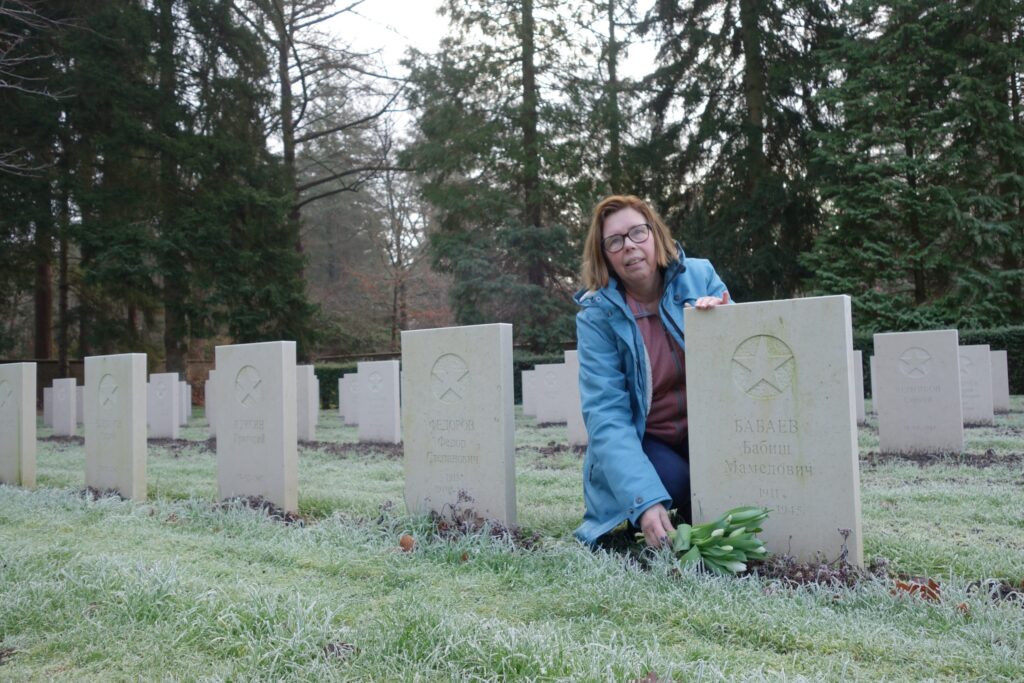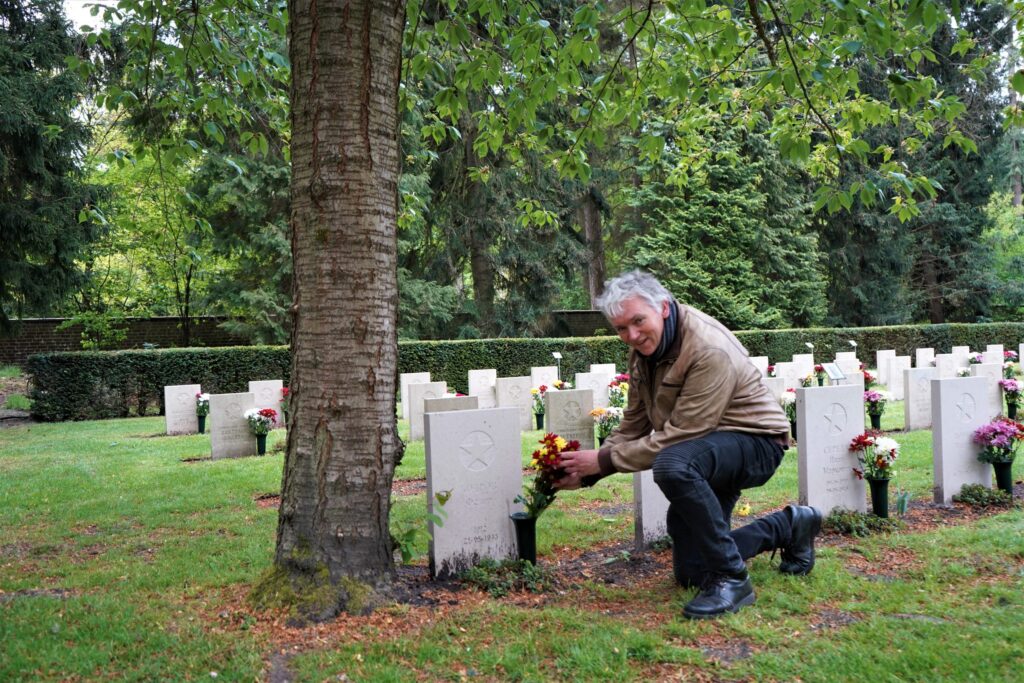

Natalia was born in Leningrad (Russia) and was head of acquisitions. Now she does voluntary work. Her husband Bert is a Dutchman, but lived in Russia for nine years. He is a pensioner and also does a lot of voluntary work. Together they adopted a grave in May 2015.
How did you get involved with the cemetery?
“After we moved from Russia to the Netherlands in 2003, Natalia found information about the Russian Military Cemetery, as it was then called, on the Internet. The first time we went there, together with the children who were then respectively 4 and 7 – both born in Russia – was on 9 May (celebrated in Russia as Victory Day).
We arrived at the War Cemetery after school hours, so the annual ceremony had finished. We were all alone. It was touching to see the tombstones with the soldiers’ names in Cyrillic, so far from home. Our daughter walked past the rows and read the names (Ivan, Nikolaj, Andrej, Aleksey).”
An emotional moment?
“We got tears in our eyes as we heard the names of these soldiers read aloud on this deserted cemetery, and at the time we couldn’t explain to the kids how these soldiers had ended up in the Netherlands. We didn’t know anything about their background. It was nice to see all the flowers and wreaths, it felt good that the graves had not been forgotten and were well tended.”
As it happened Natalia chanced upon an advertisement asking for a volunteer for the Russian Military Cemetery to support a journalist called Reiding. “The amazement, appreciation and respect for his work made the decision easy; we wanted to become involved. It did not matter what we had to do: Placing flowers at the graves, translating, driving next of kin through the Netherlands…”
And one thing led to another?
“Exactly. In 2015 we adopted the grave of Aleksey Chupka. Aleksey is one of many soldiers whose family will probably never be traced and whose grave will never be visited by a relative. There are so many questions. Has his name been misspelt? Did he even have a family? And if so, did they survive the war? What was their life like after receiving a little document from the authorities stating that their father was missing in action? We’ll never know. But he must not be forgotten, we sort of give him a small family here in the Netherlands.”
As a native Russian the cemetery is extra special to Natalia.
“It gives me such a warm feeling to see how many people are attending ‘our soldiers’. I am immensely grateful to all the people who beside their jobs provide translations for the foundation, keep the site up to date, organize grave visits, open their homes to next of kin, help with the administration, make photos and films, put flowers on the graves, burn candles and financially support the foundation.
Thus ‘our soldiers’ will never be forgotten. We consider it an honour to be part of something so big.
Спасибо!”
In this section, donors of the Soviet War Cemetery Foundation will have their say. They speak in a personal capacity, not on behalf of the Soviet War Cemetery Foundation. The Foundation is an apolitical, independent organization.