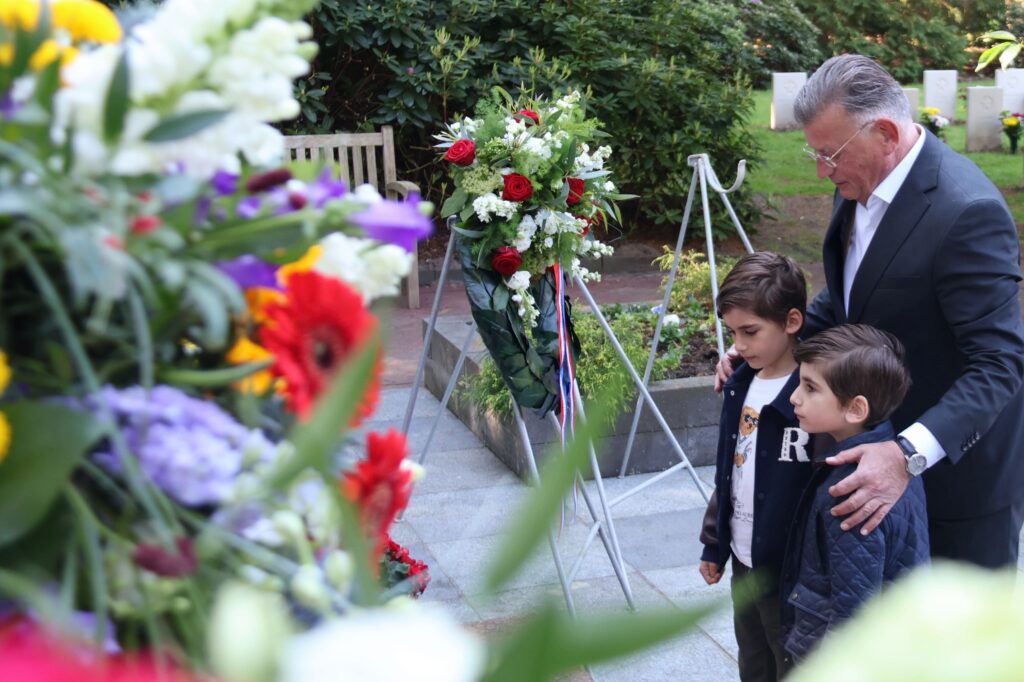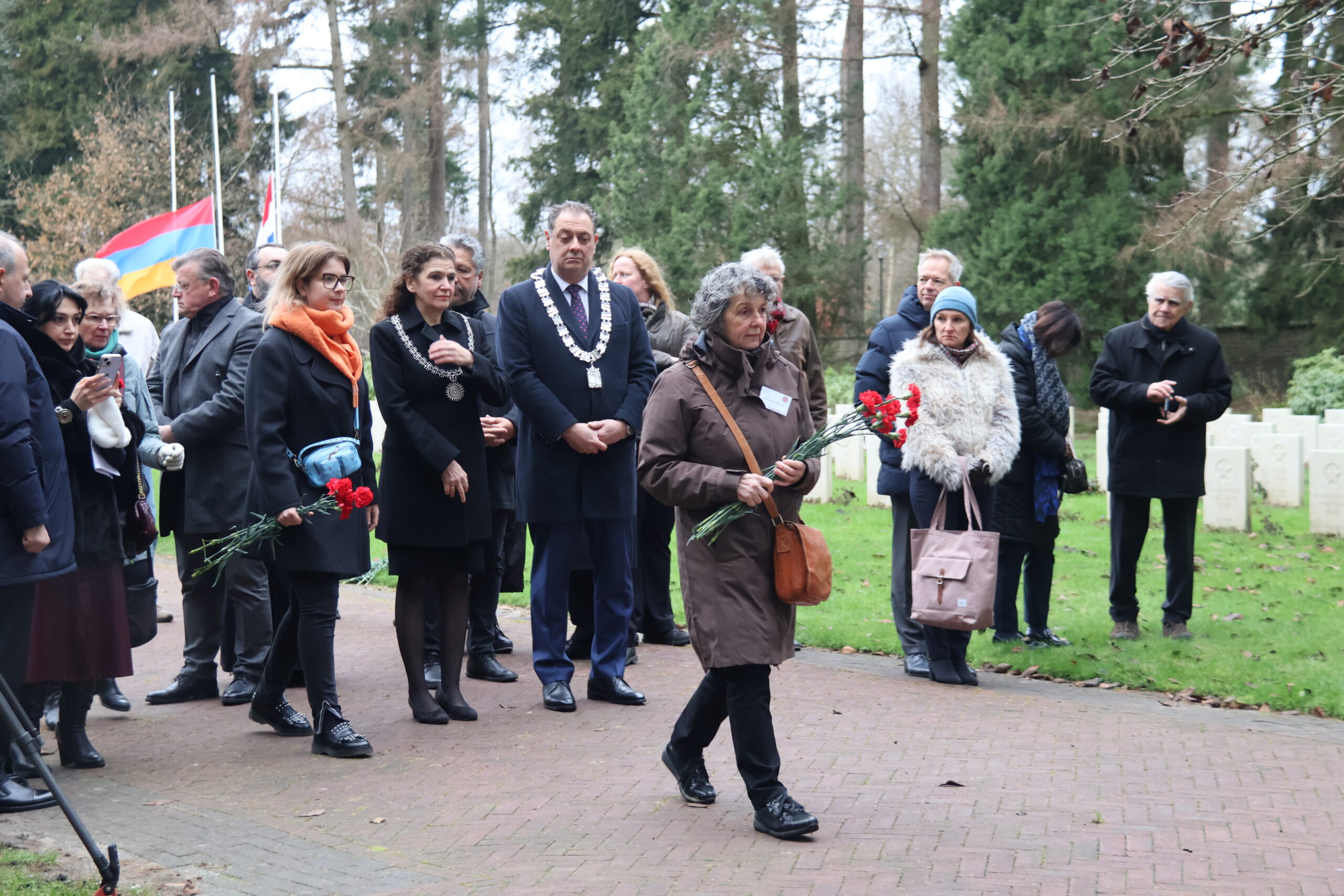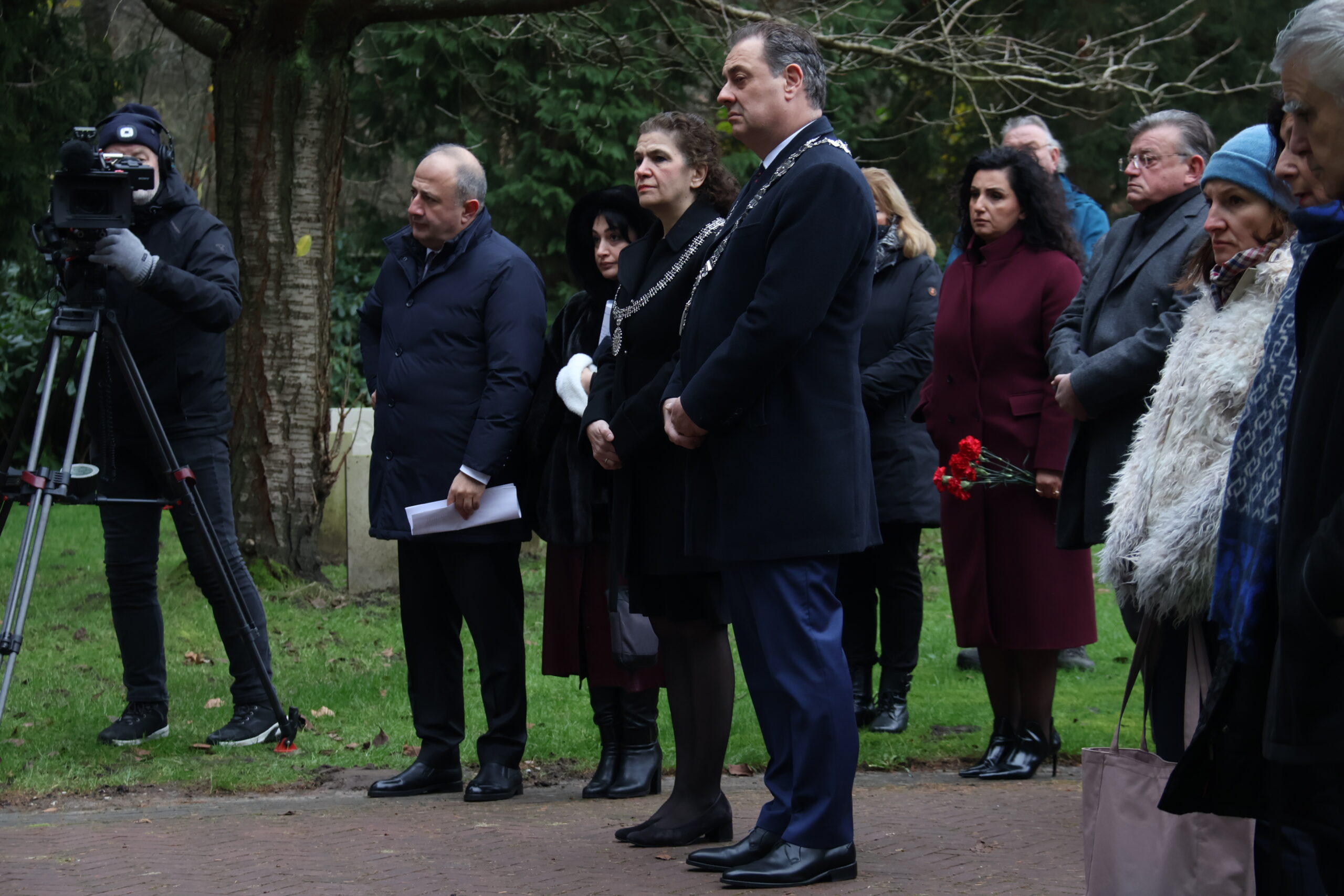
In a moving ceremony yesterday, the seven Soviet soldiers executed by the Germans on December 9, 1944—exactly 80 years ago—were commemorated in Leusden and Middelharnis. After the war, they were reburied at the Soviet Cemetery, and for decades, their families had no idea what had happened to their loved ones.
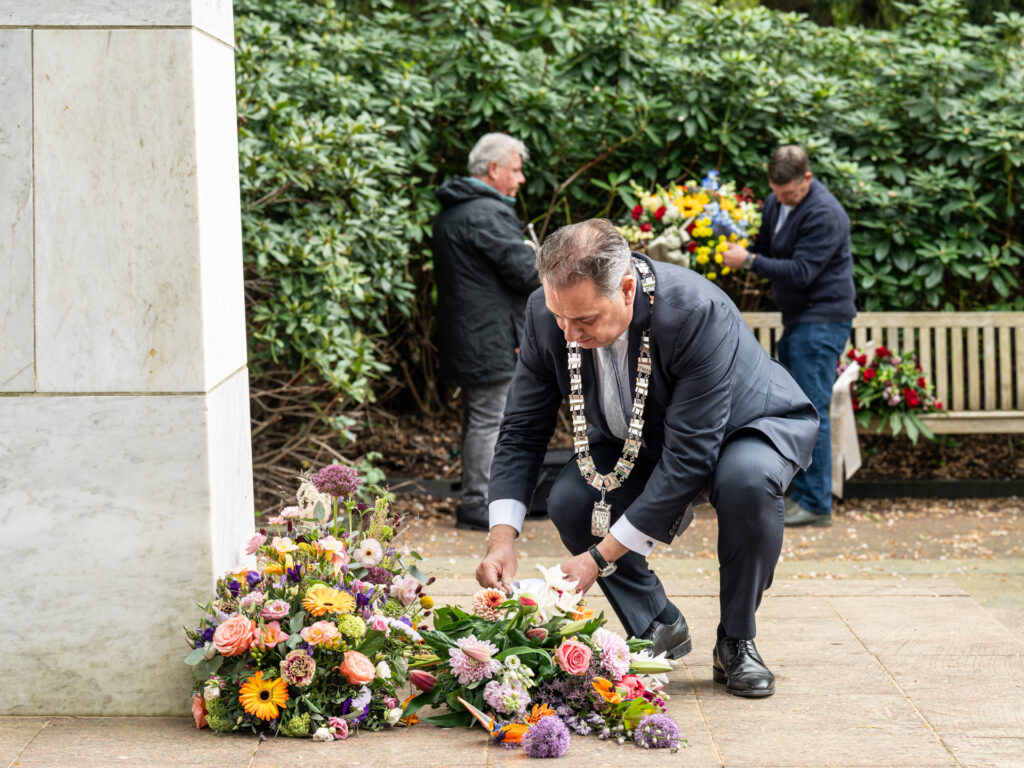
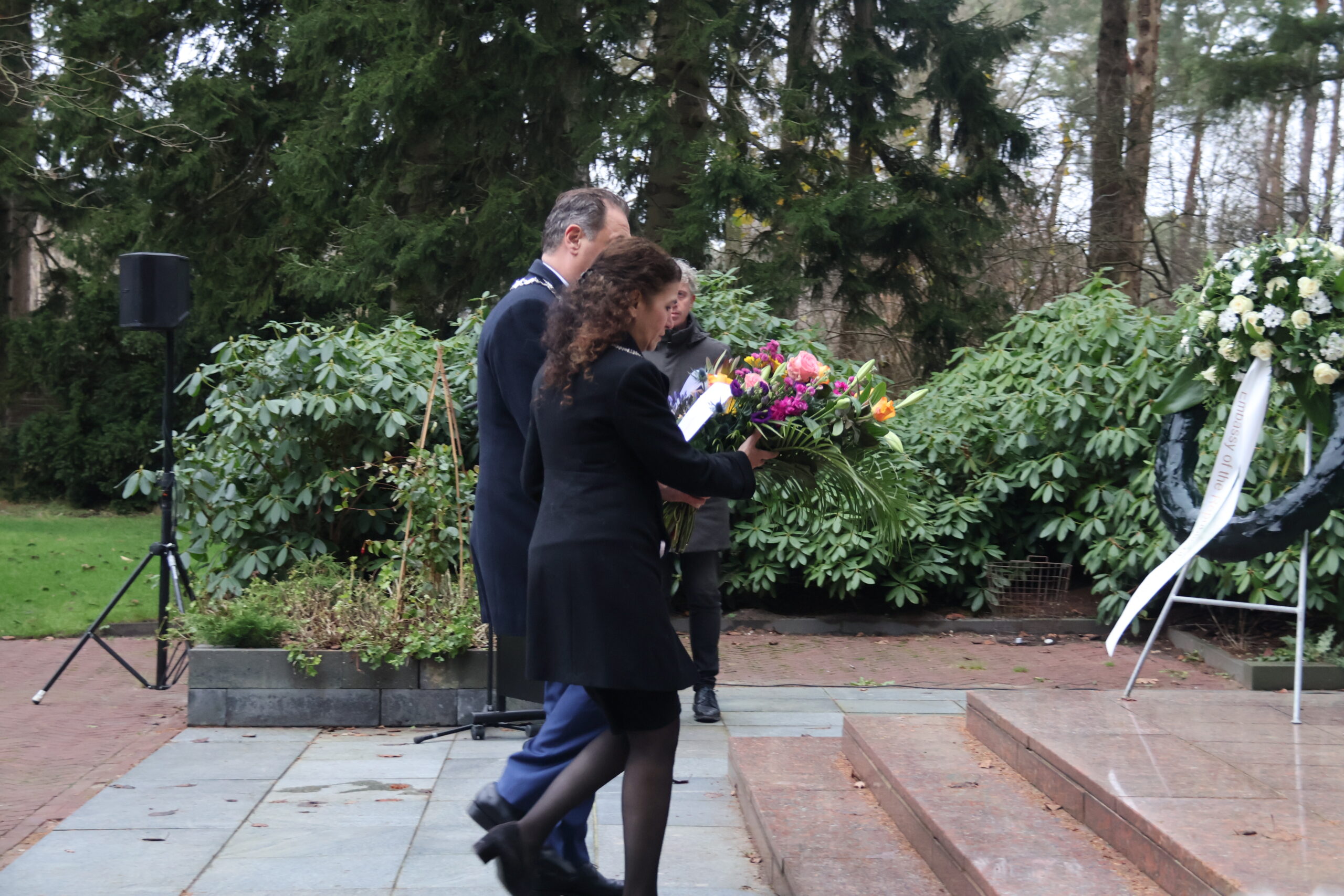
Gerolf Bouwmeester, Mayor of Leusden, spoke of “seven heroes who made the ultimate sacrifice. A reflection of perseverance and hope in these dark days.” He laid a wreath together with Micheline Paffen-Zeeni, Deputy Mayor of Amersfoort.
Chief Rabbi Binyomin Jacobs shared that he is always deeply moved, especially “after the ceremony”: “People come forward, searching for a name, and place their hand on it with deep emotion. That was their father, mother, brother, nephew, niece, uncle, or aunt. The only thing left of them is their name on the monument.” What affects him even more are the many names that no one visits—either because no family members survived the war or, in the case of the Soviet Cemetery, because the families still do not know that their father or grandfather is buried there.
Remco Reiding, Director of the Soviet Cemetery Foundation, emphasized that “life is about making choices. But the Soviet soldiers had no choices—except choosing between two evils. Since every war has a massive impact on ordinary families, we must continue to tell their stories, commemorate them, and reflect on their fate.”
The fourth speaker was Ruben Melkonjan from Armenia, who visited his grandfather’s grave this week. “My father only knew my grandfather until he was four years old—before he left as a soldier to war. After that, our family never heard from him again, and the only memory was his photograph in our home. Today marks the end of our decades-long search, and I thank everyone who made this possible.”
Prayers
After the playing of Taptoe, a minute of silence was held in remembrance of the war victims. Wreaths and flowers were then placed at the Obelisk, and candles were lit at the seven graves. Chief Rabbi Jacobs recited a Yizkor prayer for Girsj Bogdanov, a Jewish soldier from Belarus and one of the seven. Finally, Taron Tadevosyan, a priest of the Armenian Apostolic Church Surp Hoki, paused at each grave for a personal prayer.
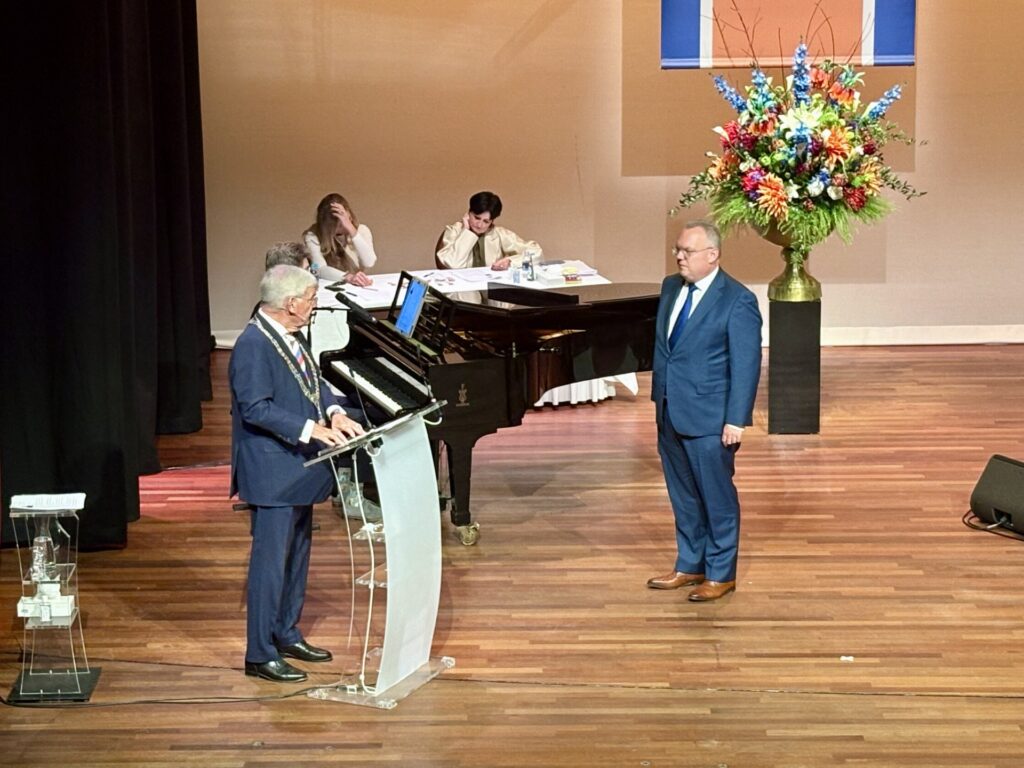
In the afternoon, a commemoration took place at the Havenhoofd in Middelharnis, the site where the seven men were executed on December 9, 1944. Ambassador Viktor Biyagov expressed his appreciation for the continued efforts to remember the Armenian war victims. Daan Markwat, Deputy Mayor of the municipality of Goeree-Overflakkee, read aloud the names on the monument at Havenhoofd and reflected on keeping the memory of the seven men alive.
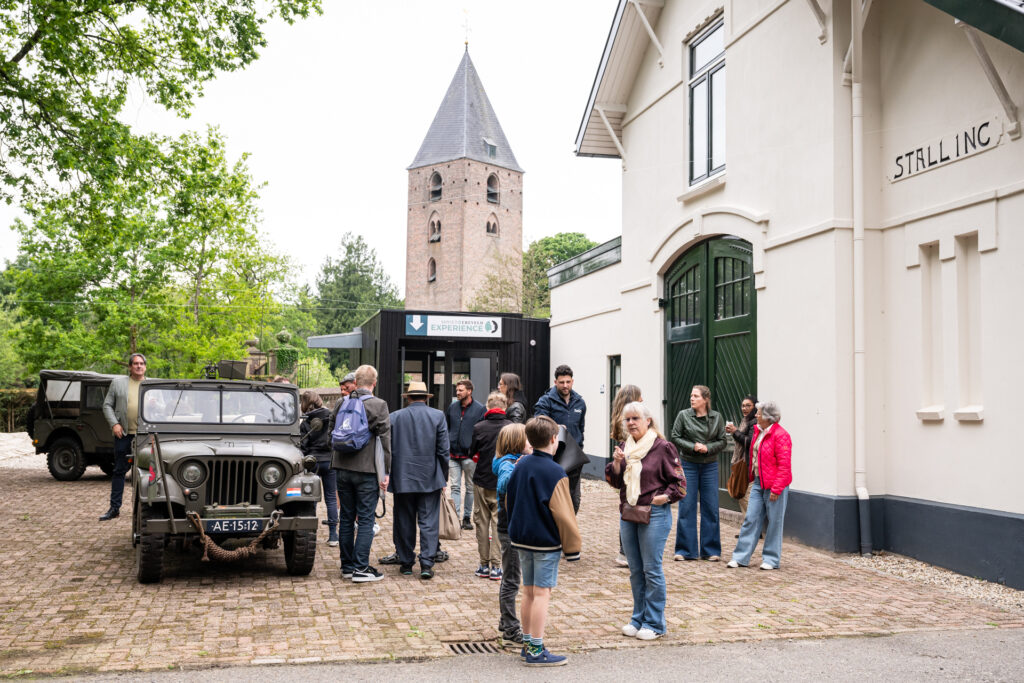
On Sunday, investigative journalist Joris Versteeg had already given a lecture about the seven men. In a packed hall at the future museum of the Soviet Cemetery Foundation, he spoke about the soldiers’ plans to revolt against the Nazis and his search for their identities and relatives.
The commemorations, Sunday’s lecture, and the relatives’ grave visits were made possible with support from Vfonds, Stichting Van Well van der Snoek, Rabo ClubSupport, and private donations. Another grave visit will be organized in March. Click here to contribute.
Special thanks to the speakers, Lubbertus Brugge (sound in Leusden), Pim Kruithof (Taptoe signal in Leusden), Marieke de Jong (Taptoe signal in Middelharnis), Rusthof Cemetery (flags and wreath stands in Leusden), the municipality of Middelharnis, the Armenian embassy, the Armenian church, and Armenian communities in the Netherlands. And, of course, to the many volunteers of the Soviet Cemetery Foundation.
Photos by Suzanne Flipse / Soviet Cemetery Foundation