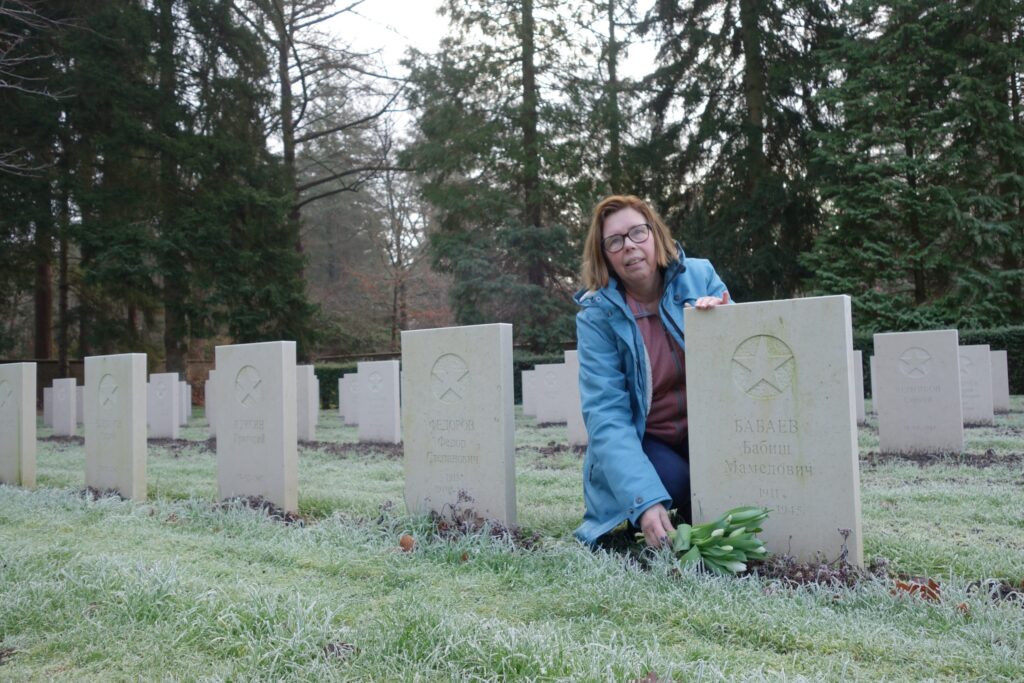
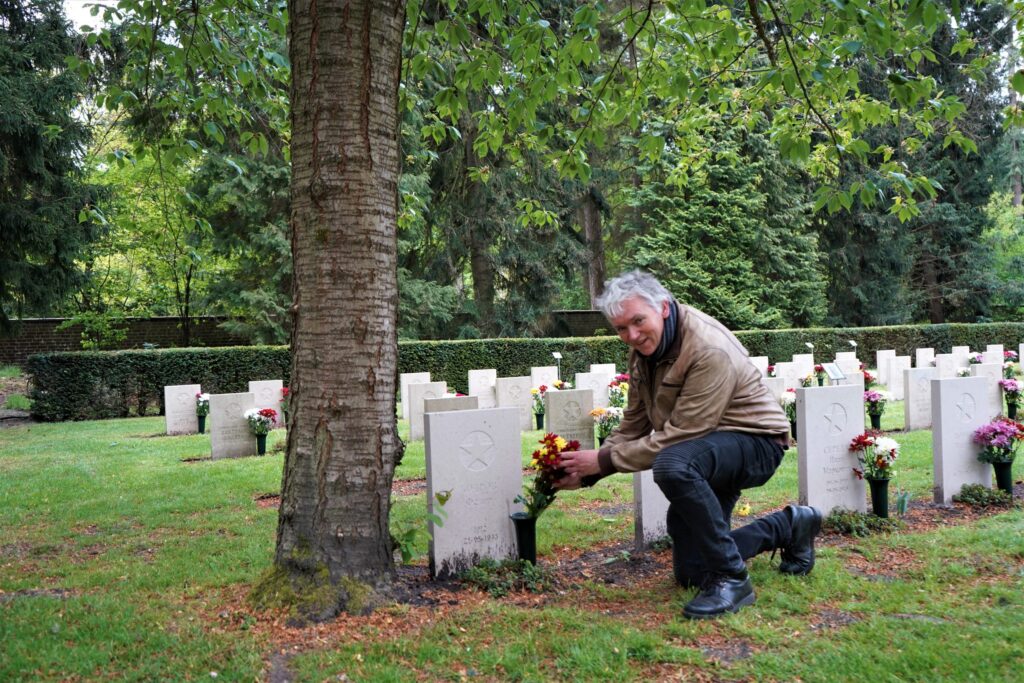
Roel is the director of libraries from the municipality of Nijkerk and adopted a grave in 2017.
“I grew up as a child with parents who really went through the Second World War in Groningen. My dad had to go into hiding and the fear this caused whenever the Germans held a roundup was immense. Even after many years he could not keep his eyes dry as he looked at his hiding place and relived it all.
The Scholten house (headquarters of the German Sicherheitsdienst) was infamous and many inhabitants of the city of Groningen and province (with the same name) have been horribly tortured there and murdered, sometimes without their body ever being found. I always felt very bad about that: family not knowing where someone lies buried. No grave to go to.
I also noticed when the state made funds available for the recovery of crashed aircraft. Sometimes with the crew still on aboard. Some municipalities said: ‘Leave them be. We’re not going to investigate.’ That was mainly finance driven. For if you realize what it does to a family when a father, son or uncle is recovered and they have a place to grieve…”
It was really brought home to Roel when he read an article about an old Russian woman receiving computer lessons. “She googled her grandfather’s name and the first hits included the name of the Soviet Military Cemetery in Leusden.
When thanks to the foundation they finally stand at the grave of their loved one, that touches me. That’s why I adopted a grave. I like to contribute. To give all those prisoners, who were abused, shot or died from deprivation, a place where they are being remembered with honour. And to have the location of their grave if possible made known to the relatives. All credit to the foundation and the unrelenting effort of Remco Reiding and all volunteers to keep digging and drawing attention to this quest.”
Roel has adopted an anonymous grave.
“As far as I know there is no story attached to it. Naturally I hope that somewhere a family member is found. I once studied Russian when I attended the library academy. But that knowledge has long since gone. Maybe this is another reason to take it up again and do some digging myself, mail et cetera…”
In this section, donors of the Soviet War Cemetery Foundation will have their say. They speak in a personal capacity, not on behalf of the Soviet War Cemetery Foundation. The Foundation is an apolitical, independent organization.