Well, that was some adventure. Sixty meters underground we filmed for our Virtual Reality Experience in a coal mine, where we re-enacted how our protagonist was put to work under appalling conditions with other prisoners of war. This is how it went.
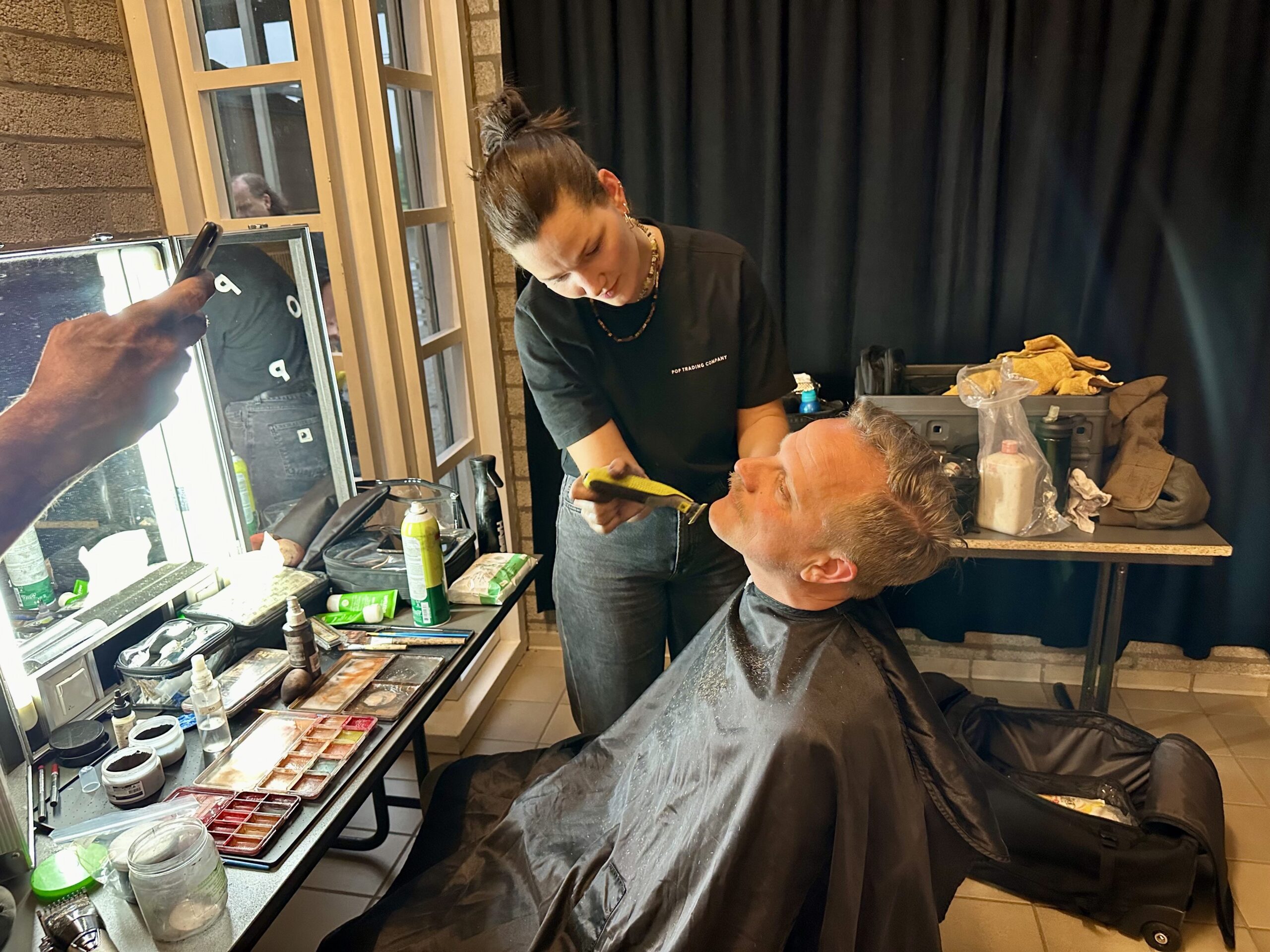
The make-up artist puts a few more black strokes on the forehead of one of our extras, and then we step into a small cage. Three men, five men, guide Jan keeps nodding that there is enough room. Like sardines in a can, we stoop in the low elevator. Jan locks the entrance with a chain and closes the door. Then the cage starts to move with a creaking sound.
It only takes a few seconds before we descend into pitch darkness. Even the bright yellow safety helmets have become invisible. Someone jokes that we should keep our hands in our pockets to relieve the tension. For none of us have been sixty meters underground before.
It takes almost a minute before the elevator jerks to a stop. Jan shouts some incomprehensible French words to an invisible colleague and then he opens the door. The heavy rain is also pouring down here, 60 meters underground, along the elevator shaft. “It’s unheard of”, says Jan, who has worked as a miner for more than 15 years.
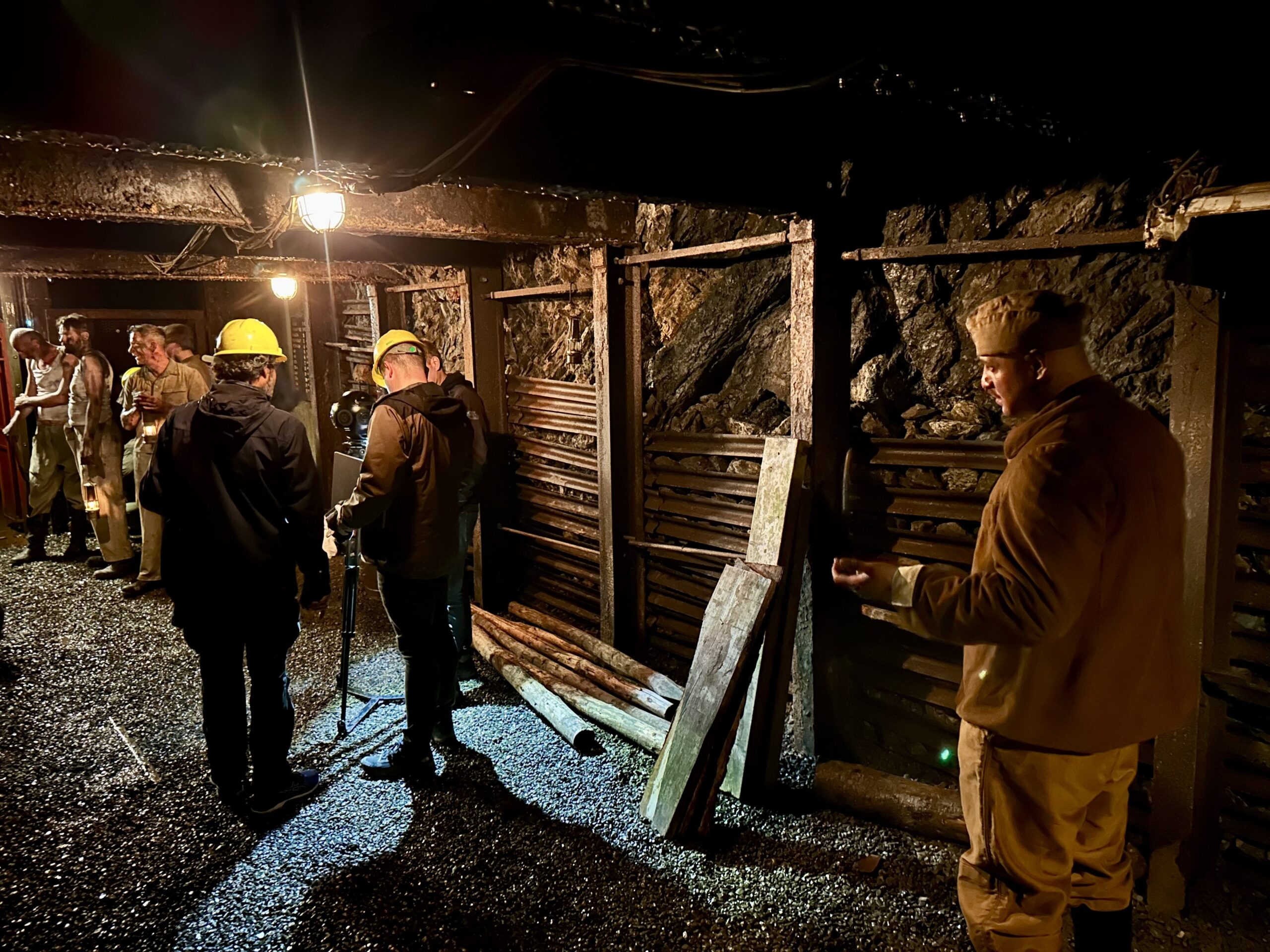
Lots of water in a mine shaft – it heightens the tension for newcomers in the former Argenteau-Trembleur coal mine, now recognized by UNESCO as a World Heritage Site and transformed into a mining museum. We enter a long tunnel with a narrow gauge track in the middle, which was used to transport the lumps of coal.
Jan shows us around and demonstrates how coal was extracted with a jackhammer. A deafening noise fills the gallery.
The eight-eyed VR camera is already set up. Young men who a short time ago were sitting in the canteen in neat clothing now look smudged and are wearing old prison garb. With a flashlight in their hand, they wait for the director’s signal: “Action!”
Our main character must have worked in a mine like this during the Second World War. Exhausted from the hard physical labour, worn out by the repetitive work, day in and day out, in long shifts. Starved, because the Nazis did not consider Soviet prisoners of war to be worthy of human dignity and therefore barely fed them.
Reichsführer Heinrich Himmler told them to ‘zum Tod arbeiten’ (labour until death). “The fact that tens of thousands, even hundreds of thousands, of prisoners of war die of hunger and exhaustion is regrettable only because it means a loss of workers”, Himmler said.
Tuberculosis was already the number one disease for miners, and in those bizarrely harsh conditions, there was little escape for the exhausted, malnourished Soviet prisoners of war. Our protagonist also contracted tuberculosis. How did he fare after that? You’ll see that in the VR Experience at our museum, which will open its doors in March.
P.S. If you want to contribute to the realization of our museum, become a Stone bearer. Or donate!